Szeto Ballet Studio
Loveboat, TaipeiSzeto Ballet Studio is a small dance school on the outskirts of Taipei where Ever discovers a chance to resume ballet during her summer at Chien Tan. Found first in a photographer’s album and then reached after a forty-five-minute journey from campus, the studio turns dance from a private longing into a commitment with a place, a teacher, and a performance date. Its invitation gives Ever a choice that conflicts with the program’s highlight tour, bringing the struggle between obligation and self-expression into sharp focus.
Discovery and Setting
Ever finds the studio while looking through Yannie’s photography albums. Among pictures of a kung fu master class, a dragon drum troupe, and a dance by an expensive Taipei school, she comes upon a modest album labeled “Szeto Ballet Studio.” Its photographs show casts performing Cinderella, The Nutcracker, Sleeping Beauty, and Coppélia. Ever recognizes the repertory from her own training at Zeigler’s, but notices that the same girls appear season after season, each a year older. The small scale does not diminish the possibility it represents: running a finger over the address, she wonders whether the studio will have room for her.
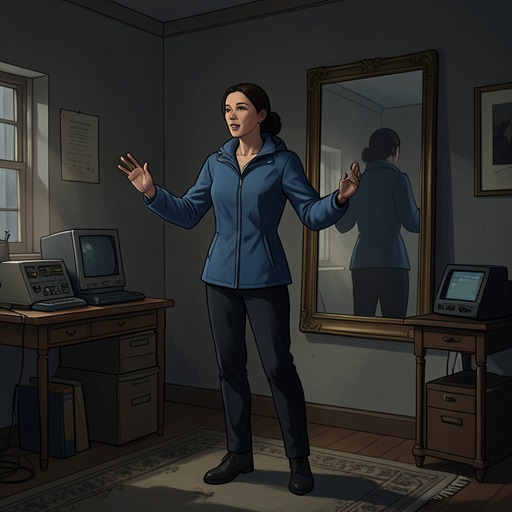
After separating from Sophie at the Metro, Ever travels another few blocks to the blue line and walks to the studio, forty-five minutes from campus. A glass door opens into a modest two-story building. Inside, faded pink walls and dated but well-loved Chinese wooden furniture surround the reception room; beyond the desk, a mirror-lined studio holds a dozen girls her age stretching at a polished double bar. Tchaikovsky’s “Waltz of the Flowers” accompanies instruction called out in a mixture of Mandarin and French. The room offers a striking contrast to a distant, expensive dance institution: it is small and unpretentious, yet ballet is actively practiced there.
Welcome and Opportunity
Madame Szeto greets Ever in American-accented English and is surprised to learn that a student from Chien Tan has found her school through a photography studio. Ever introduces herself as a dancer, hesitating over the word, and asks whether there is space in the classes or summer program. Madame Szeto welcomes her, then hands her an amateur playbill: the studio is preparing excerpts from Swan Lake for an August performance at the community theater.
Ever’s enthusiasm is immediate. Odette, the swan curse, the white-feathered dress, the evil double, and the love story make Swan Lake one of her favorite ballets. The practical details, however, matter as much as the fantasy. Ever asks the cost of lessons and learns that the price is within reach; she suspects Madame Szeto has not raised it in ten years. Most of the dancers have already prepared for weeks, so Madame Szeto warns that Ever might be disappointed. Even so, she offers an audition slot for eight o’clock on the Sunday after next.
A Choice Against the Tour
For Ever, the early audition is worth taking: she has studied the choreography obsessively and even imagines improvising to show what she can do. The performance falls on the second weekend of August, when Chien Tan is scheduled to take its Tour Down South, the summer program’s highlight. Rather than treating that conflict as a reason to abandon the opportunity, Ever decides she will find a way out of the tour. Calling the studio’s offer her last dance and her farewell, she says she will take the slot.
Madame Szeto enters “Wong Ai-Mei” in her ledger and gives Ever a card for a dance shop selling clothes and shoes. Ever clutches the card like a lifeline. Outside in the hot sun, she makes a cartwheel on the sidewalk despite her usual disapproval of showy cartwheels. The gesture marks the studio’s effect before any audition or performance has taken place: ballet has again given her a reason to move openly, and a next step she is willing to pursue.
Significance
The studio matters not because the evidence establishes the outcome of Ever’s audition, but because it gives her desire a concrete form. An address, an affordable lesson, an audition time, and a community-theater performance turn dance into an actionable alternative to the itinerary imposed by Chien Tan. The collision with the Tour Down South makes her decision consequential: she is prepared to risk missing the program’s central excursion for the chance to dance.
Its modest rooms also provide a counterpoint to Ever’s earlier training and to the glamour she encounters elsewhere in Taipei. The photographs show a small company whose dancers return to the same repertory as they grow older; the live studio places Ever among girls stretching and working at the barre. That continuity offers neither a guaranteed role nor a promised future, but it makes a place for her to ask to participate. In the larger conflict between inherited expectations and personal choice, Szeto Ballet Studio becomes the setting where she begins to act on her own preference rather than merely imagining it.